
Advertising

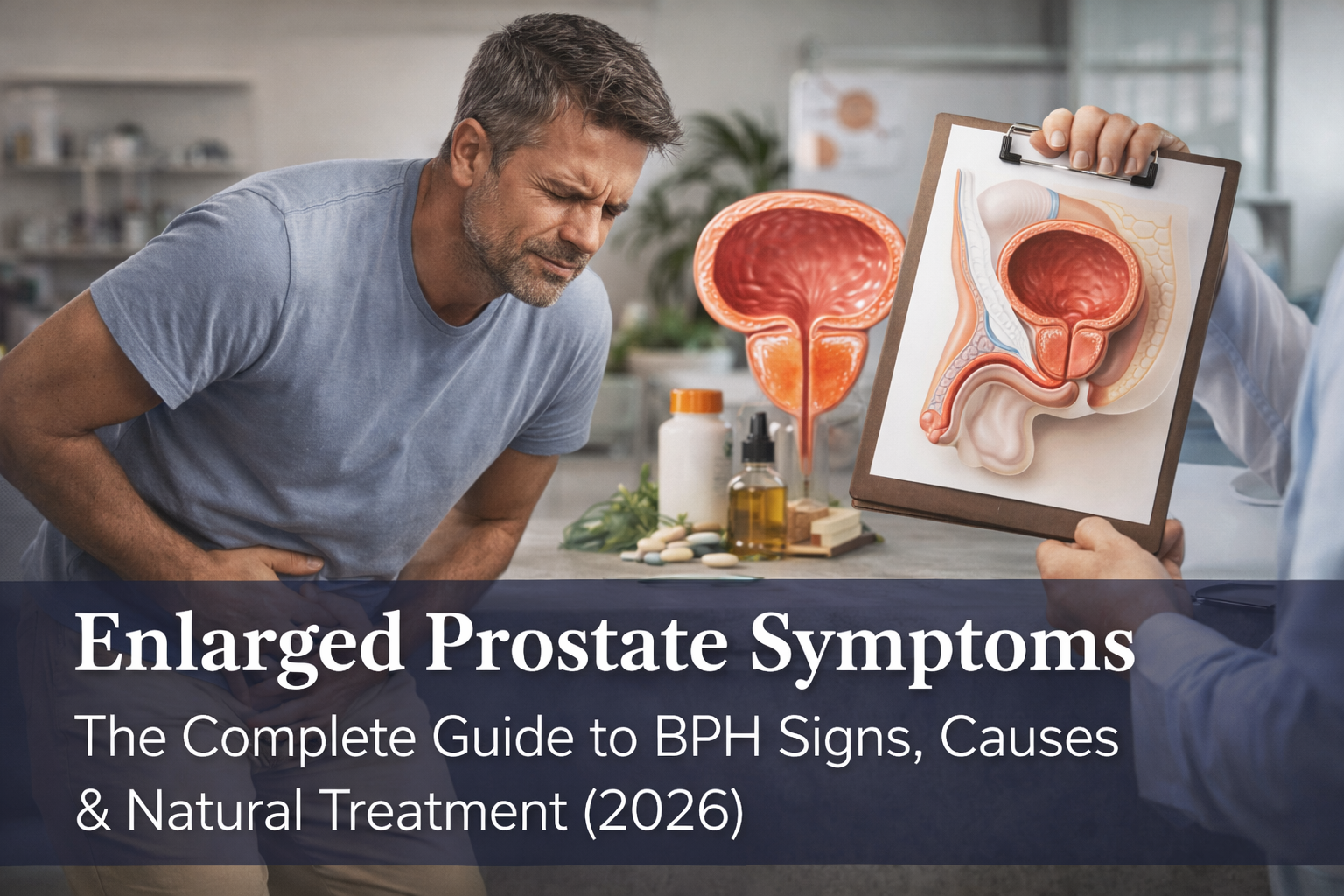
Enlarged Prostate Symptoms: The Complete Guide to BPH Signs, Causes & Natural Treatment (2026)


TL;DR — Quick Summary for Busy Readers

The Problem: By age 50, half of all men have an enlarged prostate (BPH). By 80, it’s over 90%. Symptoms like frequent urination, weak stream, and nighttime bathroom trips affect quality of life—but most men suffer in silence, thinking it’s “just aging.”

What You’ll Learn: The complete breakdown of enlarged prostate symptoms, what causes BPH, when to worry about prostate cancer, and 12 proven natural treatments that can significantly reduce symptoms without prescription drugs or surgery.

The Bottom Line: An enlarged prostate is incredibly common and highly treatable. Natural approaches can reduce symptoms by 30-50% for many men, potentially avoiding medications with sexual side effects.

Best For: Men 45+ experiencing urinary symptoms who want to understand their condition and explore natural treatment options.

Skip to: Symptoms Checklist [blocked] | BPH vs Cancer [blocked] | Natural Treatments [blocked] | Supplements [blocked]


Introduction: The Problem Every Man Will Face

Here’s an uncomfortable truth:

If you live long enough, you will have an enlarged prostate.

It’s not a matter of if—it’s when.

By age 50, 50% of men have benign prostatic hyperplasia (BPH)—the medical term for an enlarged prostate. By age 60, it’s 60%. By 80, over 90% of men are affected [1].

Yet most men know almost nothing about their prostate until it starts causing problems.

And when those problems start?

  • Waking up 3, 4, 5 times per night to urinate
  • Standing at the urinal waiting… and waiting… and waiting
  • The urgent need to go RIGHT NOW
  • The feeling that you never fully empty your bladder
  • The embarrassment of planning every outing around bathroom locations

These symptoms steal your sleep, your confidence, and your quality of life.

The worst part? Most men assume it’s “just getting old” and suffer in silence for years—unaware that effective treatments exist.

This guide changes that.

We’ll cover everything you need to know about enlarged prostate symptoms, what causes them, when to worry, and most importantly—12 proven natural treatments that can significantly improve your symptoms.

You don’t have to accept a life controlled by your bladder.

Let’s take back your freedom.


Understanding Your Prostate: The Basics

Before we discuss what goes wrong, let’s understand this mysterious gland.

What Is the Prostate?

The prostate is a walnut-sized gland located just below the bladder, surrounding the urethra (the tube that carries urine from bladder to penis).

Its main functions:

  • Produces fluid that nourishes and transports sperm
  • Contracts during ejaculation to propel semen
  • Contains muscles that help control urination

The problem: The prostate wraps AROUND the urethra. When it enlarges, it squeezes the urethra like a clamp on a garden hose—restricting urine flow.

What Is BPH (Benign Prostatic Hyperplasia)?

BPH is non-cancerous enlargement of the prostate gland.

Key points:

  • “Benign” = not cancer
  • “Prostatic” = relating to the prostate
  • “Hyperplasia” = increase in cell number (growth)

BPH is NOT prostate cancer. However, men can have both conditions simultaneously, which is why proper evaluation is important.

Why Does the Prostate Enlarge?

The exact cause isn’t fully understood, but several factors contribute:

Hormonal Changes:

  • Testosterone converts to DHT (dihydrotestosterone) in the prostate
  • DHT stimulates prostate cell growth
  • As men age, DHT accumulates even as testosterone declines
  • Estrogen levels rise relative to testosterone, potentially promoting growth

Age:

  • Prostate growth is minimal until around age 40
  • Then begins gradual enlargement in most men
  • Continues throughout life

Other Factors:

  • Family history (genetic component)
  • Obesity and metabolic syndrome
  • Diet and lifestyle factors
  • Inflammation

The Anatomy of the Problem

Imagine your urethra as a straw running through the center of a donut (the prostate).

As the donut grows larger, it squeezes the straw from all sides. This is exactly what happens with BPH:

  1. Prostate tissue grows inward toward the urethra
  2. Urethra becomes compressed and narrowed
  3. Urine flow is restricted
  4. Bladder must work harder to push urine through
  5. Over time, bladder muscle thickens and becomes overactive
  6. Eventually, bladder may not empty completely

Result: The frustrating urinary symptoms that affect millions of men.


The Complete Enlarged Prostate Symptoms Checklist

BPH symptoms are divided into two categories: obstructive (blocking urine flow) and irritative (bladder overactivity).

Obstructive Symptoms (Flow Problems)

These result from the physical blockage of the urethra:

1. Weak Urine Stream

What It Feels Like:

  • Urine comes out slowly, without force
  • Stream may be thin or “wimpy”
  • Takes longer to empty bladder than it used to
  • May dribble rather than flow

Why It Happens: Narrowed urethra restricts flow rate, like putting your thumb over a garden hose.

Severity Indicator: 🟡 Common early symptom


2. Hesitancy (Difficulty Starting)

What It Feels Like:

  • Standing at the urinal waiting for urine to start
  • Need to strain or push to begin urinating
  • May take 30+ seconds to start flow
  • Worse when bladder isn’t very full

Why It Happens: The compressed urethra requires more pressure to open; bladder must build up more force before flow begins.

Severity Indicator: 🟡 Common, often embarrassing


3. Intermittent Stream (Stop-Start)

What It Feels Like:

  • Urine stream stops and starts multiple times
  • Can’t maintain continuous flow
  • May need to strain to restart
  • Frustrating and time-consuming

Why It Happens: Bladder pressure fluctuates as it works against resistance; stream stops when pressure drops below threshold.

Severity Indicator: 🟡 Moderate symptom


4. Straining to Urinate

What It Feels Like:

  • Need to push or bear down to urinate
  • Using abdominal muscles to force urine out
  • Urination feels like work
  • May cause fatigue or discomfort

Why It Happens: Obstruction requires more force than normal bladder contraction provides.

Severity Indicator: 🟠 Indicates significant obstruction


5. Incomplete Emptying

What It Feels Like:

  • Feeling that bladder isn’t empty after urinating
  • Urge to go again shortly after finishing
  • May try to urinate more but little comes out
  • Persistent feeling of fullness

Why It Happens: Obstruction prevents complete emptying; residual urine remains in bladder.

Severity Indicator: 🟠 Can lead to complications


6. Terminal Dribbling

What It Feels Like:

  • Dribbling or leaking after you think you’re done
  • Staining underwear
  • Need to stand at urinal longer, waiting for drips
  • “Shaking it” doesn’t help

Why It Happens: Weakened urethra and pelvic floor muscles can’t fully expel remaining urine.

Severity Indicator: 🟡 Common, annoying but not dangerous


Irritative Symptoms (Bladder Overactivity)

These result from the bladder working harder and becoming overactive:

7. Frequency (Urinating Often)

What It Feels Like:

  • Needing to urinate every 1-2 hours
  • Going 8+ times during the day
  • Much more often than peers
  • Constantly aware of bladder

Why It Happens: Bladder never fully empties, so fills to “trigger” level faster; bladder wall also becomes irritable.

Severity Indicator: 🟡 Very common


8. Nocturia (Nighttime Urination)

What It Feels Like:

  • Waking up 2+ times per night to urinate
  • Sleep constantly interrupted
  • Exhaustion from fragmented sleep
  • May affect bed partner too

Why It Happens: Same frequency issue, but particularly disruptive because it destroys sleep quality.

Severity Indicator: 🔴 Major quality of life impact


9. Urgency (Sudden Need to Go)

What It Feels Like:

  • Sudden, strong urge to urinate immediately
  • Little warning before urgent need
  • Fear of not making it to bathroom in time
  • Anxiety about being far from toilets

Why It Happens: Overactive, irritable bladder sends “urgent” signals even when not full.

Severity Indicator: 🟠 Can significantly limit activities


10. Urge Incontinence (Leaking)

What It Feels Like:

  • Leaking urine before reaching toilet
  • Wet spots in underwear
  • Embarrassing accidents
  • Need to wear pads or guards

Why It Happens: Bladder contractions are stronger than weakened sphincter can resist.

Severity Indicator: 🔴 Significant impact, needs attention


Severe Symptoms (Require Medical Attention)

These indicate complications that need prompt evaluation:

11. Acute Urinary Retention

What It Feels Like:

  • Complete inability to urinate despite strong urge
  • Severe lower abdominal pain
  • Bladder feels distended
  • Medical emergency

Why It Happens: Complete obstruction prevents any urine from passing.

Action Required: 🚨 Go to emergency room immediately — requires catheterization


12. Blood in Urine (Hematuria)

What It Feels Like:

  • Pink, red, or brown urine
  • May have visible clots
  • Can occur with or without pain
  • Very alarming

Why It Happens: Enlarged prostate has more blood vessels that can bleed; can also indicate other conditions.

Action Required: 🚨 See doctor promptly — needs evaluation to rule out other causes


13. Urinary Tract Infections (Recurring)

What It Feels Like:

  • Burning with urination
  • Fever and chills
  • Cloudy or foul-smelling urine
  • May have lower back pain

Why It Happens: Residual urine in bladder becomes breeding ground for bacteria.

Action Required: 🚨 See doctor — needs antibiotics and BPH management


14. Bladder Stones

What It Feels Like:

  • Severe pain during urination
  • Blood in urine
  • Interrupted urine stream (stone blocking outlet)
  • Lower abdominal pain

Why It Happens: Minerals crystallize in residual urine, forming stones.

Action Required: 🚨 See doctor — may need procedure to remove


15. Kidney Damage (Rare)

What It Feels Like:

  • Often no symptoms until advanced
  • Fatigue, swelling, nausea in severe cases
  • Back pain
  • Elevated creatinine on blood tests

Why It Happens: Severe, prolonged obstruction causes back-pressure that damages kidneys.

Action Required: 🚨 Requires medical management — serious complication


Symptom Severity Self-Assessment: The IPSS Score

The International Prostate Symptom Score (IPSS) is the standard tool doctors use to assess BPH severity.

Take the IPSS Assessment

Rate each question from 0-5:

  • 0 = Not at all
  • 1 = Less than 1 time in 5
  • 2 = Less than half the time
  • 3 = About half the time
  • 4 = More than half the time
  • 5 = Almost always

Over the past month:

 
# Question Score (0-5)
1 How often have you had the sensation of not emptying your bladder completely after urinating? ___
2 How often have you had to urinate again less than 2 hours after finishing? ___
3 How often have you found you stopped and started again several times when urinating? ___
4 How often have you found it difficult to postpone urination? ___
5 How often have you had a weak urinary stream? ___
6 How often have you had to push or strain to begin urination? ___
7 How many times do you typically get up at night to urinate? (0=none, 1=1 time, 2=2 times, 3=3 times, 4=4 times, 5=5+ times) ___

Total IPSS Score: ___

Interpreting Your Score

 
Score Severity Recommendation
0-7 Mild Watchful waiting, lifestyle modifications
8-19 Moderate Consider treatment—natural or medical
20-35 Severe Treatment recommended—see urologist

Quality of Life Question

If you were to spend the rest of your life with your urinary condition just the way it is now, how would you feel?

 
Rating Response
0 Delighted
1 Pleased
2 Mostly satisfied
3 Mixed—equally satisfied and dissatisfied
4 Mostly dissatisfied
5 Unhappy
6 Terrible

If you scored 3 or higher on quality of life, treatment is likely warranted regardless of IPSS score.


BPH vs Prostate Cancer: Understanding the Difference

One of the biggest fears men have when experiencing urinary symptoms: “Is this cancer?”

Let’s address this directly.

The Reassuring Truth

BPH is NOT cancer and does NOT increase your risk of prostate cancer.

They are completely separate conditions:

 
Factor BPH Prostate Cancer
What it is Non-cancerous overgrowth Malignant tumor
Location Usually central/transitional zone Usually peripheral zone
Cause Hormonal, aging Genetic, hormonal, unknown
Threat level Quality of life issue Can be life-threatening
Spread Never spreads Can metastasize
Common symptoms Urinary symptoms Often NO symptoms early

Why BPH Often Causes Symptoms But Cancer Often Doesn’t

BPH grows in the central part of the prostate (around the urethra), so even small growth causes symptoms.

Prostate cancer usually grows in the outer (peripheral) part of the prostate, away from the urethra. It can grow significantly before causing any symptoms.

Key Point: The presence of BPH symptoms does NOT rule out cancer. Men can have both. This is why screening is important.

When to Worry About Cancer

See a doctor for evaluation if you have:

  • Blood in urine or semen
  • Bone pain (especially lower back, hips, pelvis)
  • Unexplained weight loss
  • Erectile dysfunction (new onset)
  • Family history of prostate cancer
  • African American heritage (higher risk)
  • Age 50+ (screening should begin)

Recommended Screening

For Average Risk Men:

  • Discussion with doctor about PSA testing starting at age 50
  • Digital rectal exam (DRE) as part of evaluation

For Higher Risk Men (African American, family history):

  • Discussion about screening starting at age 40-45

Important: PSA is not perfect—it can be elevated with BPH, infection, or cancer. Elevated PSA doesn’t mean cancer; it means further evaluation may be needed.


What Causes Enlarged Prostate? Risk Factors You Can (and Can’t) Control

Understanding causes helps you understand which factors you can modify.

Factors You CANNOT Control

Age

The single biggest risk factor. BPH is rare before 40 but nearly universal by 80.

 
Age Percentage with BPH
40-49 ~25%
50-59 ~50%
60-69 ~60%
70-79 ~70%
80+ ~90%

Family History

Men with a father or brother with BPH have increased risk. If a first-degree relative had BPH before age 60, your risk is higher.

Race/Ethnicity

  • African American men: Higher rates of BPH and more severe symptoms
  • Asian men: Lower rates (though Westernized Asian men have higher rates)
  • Suggests both genetic and lifestyle components

Factors You CAN Control

Obesity

The Connection:

  • Obesity increases estrogen relative to testosterone
  • Promotes inflammation
  • Associated with larger prostate size
  • Metabolic syndrome strongly linked to BPH [2]

Action: Losing weight can reduce symptoms and slow progression.


Diet

Harmful Patterns:

  • High red meat consumption
  • High dairy consumption
  • Low vegetable intake
  • High glycemic foods
  • Processed foods

Protective Patterns:

  • High vegetable intake (especially cruciferous)
  • Healthy fats (olive oil, nuts)
  • Lycopene-rich foods (tomatoes)
  • Green tea
  • Soy foods (moderate)

Physical Activity

The Connection:

  • Sedentary lifestyle associated with worse BPH symptoms
  • Exercise reduces inflammation and improves hormonal balance
  • May reduce sympathetic nervous system activity (reduces smooth muscle tension in prostate)

Research: Men with higher physical activity levels have 25% lower risk of BPH surgery [3].


Metabolic Syndrome

The combination of:

  • Elevated blood sugar
  • High blood pressure
  • Excess abdominal fat
  • Abnormal cholesterol

The Connection: Each component of metabolic syndrome independently increases BPH risk. Together, they significantly accelerate prostate growth.

Action: Managing blood sugar, blood pressure, and weight can help.


Chronic Inflammation

The Connection:

  • Prostatic inflammation is common in BPH tissue
  • Inflammation may drive prostate cell growth
  • Diet, obesity, and infection contribute to inflammation

Action: Anti-inflammatory diet and lifestyle may help.


12 Proven Natural Treatments for Enlarged Prostate

Now for what you came for: What can you actually DO about it?

These treatments are organized by evidence level and impact. Many men can significantly reduce symptoms through natural approaches, potentially avoiding or delaying medication.


Treatment 1: Reduce Nighttime Fluid Intake

Effectiveness: ⭐⭐⭐⭐⭐ (for nocturia) Time to Results: Immediate Expected Improvement: 30-50% reduction in nighttime trips

The simplest intervention—yet often overlooked.

The Protocol

Evening Fluid Management:

  • Reduce fluids 2-3 hours before bed
  • Front-load fluid intake to earlier in day
  • Avoid alcohol and caffeine after 4pm (diuretics)
  • Empty bladder twice before bed (“double voiding”)

Double Voiding Technique:

  1. Urinate normally
  2. Wait 30 seconds to 1 minute
  3. Try to urinate again
  4. Repeat before bed

What to Avoid in Evening:

  • Alcohol (diuretic + bladder irritant)
  • Caffeine (diuretic)
  • Spicy foods (bladder irritant)
  • Citrus (bladder irritant for some)
  • Excessive salt (causes fluid retention, then release at night)

Bottom Line: This alone can reduce nighttime urination by 1-2 trips for many men.


Treatment 2: Timed Voiding (Bladder Training)

Effectiveness: ⭐⭐⭐⭐ Time to Results: 2-6 weeks Expected Improvement: 20-30% reduction in frequency

Retraining your bladder to hold more urine and respond less urgently.

The Protocol

Week 1-2:

  • Keep a bladder diary (times and amounts)
  • Identify your current voiding pattern
  • Note urgency levels

Week 3-4:

  • When you feel the urge, wait 5 minutes before going
  • Use distraction techniques (deep breathing, mental tasks)
  • Gradually extend wait time

Week 5+:

  • Increase wait time by 5-10 minutes weekly
  • Goal: Urinate every 3-4 hours during the day
  • Don’t hold to the point of discomfort

Distraction Techniques for Urgency:

  • Deep slow breaths (5-10)
  • Kegel contractions (squeeze pelvic floor)
  • Mental distraction (count backward from 100 by 7s)
  • Sit down (reduces urgency signals)

Bottom Line: Bladder training can increase bladder capacity and reduce urgency over time.


Treatment 3: Pelvic Floor Exercises

Effectiveness: ⭐⭐⭐⭐ Time to Results: 6-12 weeks Expected Improvement: 25-40% symptom improvement

Yes, Kegels work for BPH symptoms too—not just erectile dysfunction.

The Science

Strong pelvic floor muscles:

  • Support the bladder and prostate
  • Help control urinary urgency
  • Improve complete bladder emptying
  • Reduce post-void dribbling

The Protocol

Finding the Muscles:

  • Stop urination mid-stream (the muscles you use are the pelvic floor)
  • Or try to “lift” your testicles without using hands
  • You should NOT be contracting abs, buttocks, or thighs

The Exercise:

Weeks 1-4:

  • Contract pelvic floor for 5 seconds
  • Relax for 5 seconds
  • 10 repetitions, 3 times daily

Weeks 5-8:

  • Contract for 10 seconds
  • Relax for 10 seconds
  • 15 repetitions, 3 times daily

Weeks 9+:

  • Maintain 15-20 reps, 2-3 times daily
  • Add “quick flicks” (rapid contractions)

Pro Tip: Practice during urgency—a strong Kegel contraction can suppress the urge to urinate.

Bottom Line: Pelvic floor exercises are free, have no side effects, and provide lasting benefit.


Treatment 4: Weight Loss

Effectiveness: ⭐⭐⭐⭐⭐ (for overweight men) Time to Results: 8-16 weeks Expected Improvement: 20-40% symptom improvement

If you’re carrying extra weight, this may be your most powerful intervention.

The Science

  • Obesity increases estrogen and inflammation
  • Abdominal fat creates pressure on bladder
  • Metabolic syndrome accelerates BPH
  • Weight loss reduces all these factors

The Research

Studies show that men who lose weight experience significant improvements in urinary symptoms [4]. Even modest weight loss (5-10%) can provide benefit.

The Protocol

Target: BMI under 25, or at least 10% reduction if significantly overweight

Approach:

  • Moderate caloric deficit (500-750 cal/day)
  • High protein (preserves muscle)
  • Reduce processed carbs and sugar
  • Mediterranean-style eating pattern
  • Regular exercise (both cardio and resistance)

Bottom Line: For overweight men, weight loss addresses one of the root causes of BPH progression.


Treatment 5: Regular Physical Activity

Effectiveness: ⭐⭐⭐⭐ Time to Results: 4-8 weeks Expected Improvement: 20-30% symptom improvement

Exercise benefits prostate health through multiple mechanisms.

The Science

  • Reduces inflammation
  • Improves insulin sensitivity
  • Lowers sympathetic nervous system activity
  • Supports healthy hormone balance
  • Helps with weight management

The Research

Men who exercise regularly have significantly lower rates of BPH symptoms and are less likely to need surgery [3].

The Protocol

Minimum Goal:

  • 150 minutes moderate activity per week
  • Or 75 minutes vigorous activity
  • Plus 2 resistance training sessions

Best Activities:

  • Walking (30+ minutes daily)
  • Swimming
  • Cycling (with proper saddle)
  • Resistance training
  • Any activity you’ll actually do consistently

Caution: Avoid prolonged sitting and activities that put pressure on perineum for extended periods.

Bottom Line: Regular exercise is one of the most evidence-based interventions for BPH symptoms.


Treatment 6: Dietary Modifications

Effectiveness: ⭐⭐⭐⭐ Time to Results: 4-12 weeks Expected Improvement: 15-25% symptom improvement

What you eat directly affects prostate health.

Foods That HELP Prostate Health

 
Food Active Compound Benefit
Tomatoes (cooked) Lycopene Antioxidant, reduces prostate inflammation
Cruciferous vegetables Sulforaphane, DIM Anti-inflammatory, supports hormone metabolism
Pumpkin seeds Zinc, phytosterols Traditional prostate remedy, clinical support
Fatty fish Omega-3s Reduces inflammation
Green tea EGCG May slow prostate cell growth
Soy foods Isoflavones May reduce DHT effects
Berries Antioxidants Reduce oxidative stress
Olive oil Polyphenols Anti-inflammatory
Nuts Selenium, healthy fats Prostate protection

Foods That HARM Prostate Health

 
Food Problem Action
Red meat (excessive) Inflammation, hormones Limit to 2-3x weekly
Processed meat Nitrates, inflammation Minimize or avoid
Dairy (excessive) Potential hormone effects Moderate intake
Alcohol Bladder irritant, diuretic Limit or avoid
Caffeine Bladder irritant, diuretic Limit, especially afternoon
Spicy foods Bladder irritant Reduce if symptoms worsen
Sugar/refined carbs Inflammation, weight gain Minimize
Processed foods Inflammation Minimize

Sample Prostate-Healthy Day

Breakfast:

  • Oatmeal with berries and walnuts
  • Green tea

Lunch:

  • Large salad with olive oil dressing
  • Grilled salmon
  • Cooked tomatoes

Dinner:

  • Stir-fry with broccoli, kale, peppers
  • Tofu or chicken
  • Brown rice
  • Pumpkin seeds as garnish

Snacks:

  • Brazil nuts (2-3)
  • Apple with almond butter

Bottom Line: A plant-rich, anti-inflammatory diet supports prostate health and can reduce symptoms over time.


Treatment 7: Limit Alcohol and Caffeine

Effectiveness: ⭐⭐⭐⭐ Time to Results: 1-2 weeks Expected Improvement: 15-30% (especially for urgency/frequency)

Both substances are diuretics and bladder irritants.

The Science

Alcohol:

  • Diuretic (increases urine production)
  • Bladder irritant (triggers urgency)
  • Relaxes bladder outlet (worsens leaking)
  • Disrupts sleep (even without bathroom trips)

Caffeine:

  • Diuretic
  • Bladder irritant
  • Increases detrusor muscle activity (urgency)
  • Effects last 4-6 hours

The Protocol

Alcohol:

  • Best: Avoid completely
  • Acceptable: 1-2 drinks per week, not after 4pm
  • Worst: Daily drinking, evening consumption

Caffeine:

  • Best: Limit to 1-2 cups coffee/tea, before noon
  • Acceptable: No caffeine after 2pm
  • Watch hidden sources: Soda, chocolate, some medications

Bottom Line: Reducing or eliminating these substances often provides noticeable symptom improvement within days.


Treatment 8: Targeted Supplementation

Effectiveness: ⭐⭐⭐⭐ Time to Results: 4-8 weeks Expected Improvement: 25-40% symptom improvement

Several natural compounds have strong evidence for BPH symptom relief.

Tier 1: Best Evidence

Saw Palmetto (Serenoa repens)

The Most Studied Natural BPH Treatment

What It Does:

  • Inhibits 5-alpha reductase (blocks T → DHT conversion)
  • Reduces inflammation in prostate
  • Relaxes smooth muscle in prostate
  • Anti-estrogenic effects

The Research: Multiple studies show improvement in urinary symptoms comparable to prescription medications, with far fewer sexual side effects [5].

Dose: 320mg daily (standardized to 85-95% fatty acids and sterols)

Timeline: 4-8 weeks for noticeable benefit; best results at 6 months

Best For: First-line natural treatment for BPH symptoms


Beta-Sitosterol

Plant Sterols for Prostate Health

What It Does:

  • Inhibits 5-alpha reductase
  • Anti-inflammatory effects
  • Improves urinary flow

The Research: Systematic reviews show significant improvement in urinary symptoms and flow rates [6]. May be more effective than saw palmetto for some men.

Dose: 60-130mg daily

Best For: Can use alone or combined with saw palmetto


Pygeum Africanum

African Tree Bark Extract

What It Does:

  • Reduces inflammation
  • May inhibit prostate cell growth factors
  • Improves urinary symptoms

The Research: Shown to reduce nighttime urination and improve flow in multiple studies [7].

Dose: 100-200mg daily (standardized extract)

Best For: Especially effective for nocturia (nighttime urination)


Tier 2: Good Evidence

Stinging Nettle Root (Urtica dioica)

What It Does:

  • May inhibit aromatase (T → estrogen)
  • Anti-inflammatory
  • May affect SHBG binding

Research: Positive results, especially combined with saw palmetto.

Dose: 300-600mg daily


Pumpkin Seed Extract

What It Does:

  • Contains phytosterols
  • Rich in zinc
  • Traditional remedy with modern research support

Dose: 500-1,000mg daily (or 1 tablespoon pumpkin seed oil)


Lycopene

What It Does:

  • Powerful antioxidant
  • Concentrates in prostate tissue
  • May reduce prostate growth

Dose: 10-30mg daily (or eat cooked tomatoes regularly)


Zinc

What It Does:

  • Essential for prostate health
  • May inhibit 5-alpha reductase
  • Prostate contains high zinc concentrations

Dose: 25-50mg daily (don’t exceed long-term without monitoring)


Our Top Supplement Recommendations for Prostate Health

Rather than buying multiple individual supplements, comprehensive formulas provide convenience and synergistic combinations.


ProstaKey is our #1 recommendation for comprehensive prostate support.

Why We Recommend It:

  • Complete prostate formula — Multiple proven ingredients in one supplement
  • Key ingredients include:
    • Saw Palmetto extract
    • Beta-Sitosterol
    • Pygeum Africanum
    • Zinc
    • Lycopene
    • Additional prostate-supporting compounds
  • Addresses multiple pathways — DHT blocking, inflammation, cell growth
  • Quality manufacturing — GMP-certified, USA-made
  • Money-back guarantee — Risk-free trial

Best For: Men with moderate BPH symptoms wanting comprehensive natural support.

→ Check Current ProstaKey Availability


Potent Stream is our top recommendation specifically for urinary flow and nighttime symptoms.

Why We Recommend It:

  • Targeted urinary formula — Specifically designed for flow improvement
  • Fast-acting relief — Many men notice improvement within weeks
  • Reduces nighttime trips — Primary benefit for quality of life
  • Supports complete emptying — Addresses residual urine
  • Quality ingredients — Effective doses, not token amounts

Best For: Men whose primary complaint is urinary flow problems and nighttime urination.

→ Learn More About Potent Stream


Which Supplement Should You Choose?

 
If Your Main Concern Is… Choose
Overall prostate health and BPH symptoms ProstaKey
Urinary flow and nighttime urination specifically Potent Stream
Maximum comprehensive support Both ProstaKey + Potent Stream

Treatment 9: Manage Blood Sugar

Effectiveness: ⭐⭐⭐⭐ (for men with metabolic issues) Time to Results: 8-12 weeks Expected Improvement: 15-25%

Insulin resistance and diabetes are strongly linked to BPH.

The Science

  • High insulin promotes prostate cell growth
  • Diabetes damages nerves and blood vessels
  • Metabolic syndrome accelerates BPH
  • Blood sugar control reduces inflammation

The Protocol

If Pre-Diabetic or Diabetic:

  • Work with doctor on blood sugar management
  • Reduce refined carbohydrates
  • Increase fiber intake
  • Regular exercise
  • Consider berberine supplement (natural blood sugar support)

If Normal Blood Sugar:

  • Maintain healthy diet to prevent insulin resistance
  • Regular exercise
  • Limit sugar and processed carbs
  • Monitor if family history of diabetes

Bottom Line: For men with blood sugar issues, addressing metabolic health can significantly improve BPH symptoms.


Treatment 10: Heat Therapy

Effectiveness: ⭐⭐⭐ Time to Results: Variable Expected Improvement: Temporary relief

Warm sitz baths can provide symptomatic relief.

The Protocol

Sitz Bath:

  • Fill bathtub with warm (not hot) water
  • Sit for 15-20 minutes
  • Repeat 2-3 times daily if helpful
  • Add Epsom salts if desired (magnesium absorption)

Benefits:

  • Relaxes pelvic muscles
  • Improves blood flow
  • Reduces inflammation temporarily
  • Provides comfort during flares

Bottom Line: Not a cure, but can provide symptomatic relief during difficult periods.


Treatment 11: Stress Management

Effectiveness: ⭐⭐⭐ Time to Results: 2-4 weeks Expected Improvement: Variable

Stress doesn’t cause BPH, but it can worsen symptoms.

The Science

  • Stress activates sympathetic nervous system
  • Sympathetic activity increases smooth muscle tone in prostate
  • Tension worsens obstruction
  • Stress also affects sleep and bladder control

The Protocol

Daily Practices:

  • Deep breathing exercises (5-10 minutes)
  • Meditation or mindfulness
  • Progressive muscle relaxation
  • Time in nature
  • Regular exercise

Address Root Causes:

  • Work-life balance
  • Relationship issues
  • Financial stress
  • Sleep problems

Bottom Line: Stress management supports overall health and can reduce BPH symptom severity.


Treatment 12: Sexual Activity

Effectiveness: ⭐⭐⭐ Time to Results: Variable Expected Improvement: Variable

Regular ejaculation may benefit prostate health.

The Science

  • Ejaculation may help clear prostatic fluid
  • May reduce congestion
  • Some studies link regular ejaculation to lower prostate cancer risk
  • Supports overall reproductive health

The Research

One large study found that men who ejaculated 21+ times per month had lower risk of prostate cancer [8]. Effects on BPH are less studied but biological plausibility exists.

The Recommendation

  • Regular sexual activity is generally beneficial
  • No specific frequency recommendation
  • Quality of life benefits beyond prostate health

Bottom Line: Regular sexual activity is part of a healthy lifestyle and may support prostate health.


The Complete Natural BPH Protocol

Let’s put it all together into an actionable system.

Daily Routine

Morning:

  • Pelvic floor exercises (15 reps)
  • Exercise (30+ minutes cardio or resistance)
  • ProstaKey (as directed)
  • Prostate-healthy breakfast

Afternoon:

  • Limit caffeine after noon
  • Continue adequate hydration
  • Mid-day pelvic floor exercises (15 reps)
  • Stress management practice

Evening:

  • Potent Stream (as directed) — especially for nocturia
  • Reduce fluids 2-3 hours before bed
  • Avoid alcohol and caffeine
  • Prostate-healthy dinner
  • Double void before bed
  • Evening pelvic floor exercises (15 reps)

Weekly Checklist

  •  150+ minutes exercise
  •  Mediterranean-style eating
  •  Minimal/no alcohol
  •  Limited caffeine
  •  Daily pelvic floor exercises
  •  Stress management practice
  •  Bladder training progress
  •  Supplements taken consistently

12-Week Progress Timeline

 
Weeks Focus Expected Progress
1-2 Fluid management, caffeine/alcohol reduction Reduced nocturia
3-4 Add supplements, start pelvic exercises Initial symptom improvement
5-8 Full protocol implementation Noticeable improvement
9-12 Optimization and habit solidification Significant improvement
Ongoing Maintenance Continued benefit

When to See a Doctor

Natural treatments work well for mild to moderate BPH, but you should see a urologist if:

Absolute Indications

🚨 See doctor immediately if:

  • Unable to urinate at all (acute retention)
  • Blood in urine
  • Fever with urinary symptoms
  • Severe pain

Strong Indications

🟠 Schedule appointment soon if:

  • IPSS score 20+ (severe symptoms)
  • Symptoms significantly affecting quality of life
  • Not improving after 12 weeks of natural treatment
  • Recurrent urinary tract infections
  • Concern about prostate cancer
  • Need faster relief than natural methods provide

Worth Discussing

🟡 Bring up at next checkup:

  • IPSS score 8-19 (moderate symptoms)
  • Questions about screening
  • Interest in prescription options
  • Want professional monitoring

Medical Treatment Options

If natural treatments aren’t sufficient, options include:

Medications:

  • Alpha-blockers (Flomax, etc.) — Relax prostate muscle
  • 5-alpha reductase inhibitors (Proscar, Avodart) — Shrink prostate
  • Combination therapy

Procedures:

  • TURP (transurethral resection)
  • Laser procedures
  • UroLift
  • Rezum water vapor therapy
  • Others

Important: Natural treatments can often be combined with medications for enhanced benefit.


Frequently Asked Questions

How do I know if my prostate is enlarged?

You can’t diagnose yourself, but symptoms suggest it. A doctor can confirm with digital rectal exam, PSA test, and possibly ultrasound or other imaging. If you have urinary symptoms described in this guide, BPH is likely.

Does an enlarged prostate mean I have cancer?

No. BPH and prostate cancer are completely different conditions. BPH is non-cancerous and doesn’t become cancer. However, you can have both simultaneously, which is why screening is important.

Can BPH be cured naturally?

BPH can’t be “cured” (the prostate won’t shrink to 20-year-old size), but symptoms can be significantly reduced—often to the point of minimal impact on life. Many men manage BPH very successfully with natural approaches.

How long do natural treatments take to work?

Most men notice improvement within 4-8 weeks, with continued improvement over 3-6 months. Lifestyle changes (fluid management, caffeine/alcohol reduction) can work immediately for some symptoms.

Do I need to take supplements forever?

For continued benefit, yes—supplements work while you take them. However, many men find they can reduce dosage after initial improvement while maintaining benefit. Lifestyle factors provide lasting benefit even if supplements are stopped.

Will BPH affect my sex life?

BPH itself doesn’t directly cause erectile dysfunction, though some men experience issues. More commonly, BPH medications (especially 5-alpha reductase inhibitors) can cause sexual side effects—which is one reason many men prefer natural treatments.

Can BPH cause permanent damage?

Untreated severe BPH can lead to complications: bladder damage, kidney damage, stones, and infections. This is why monitoring and treatment are important. Most men with mild to moderate BPH won’t develop complications if appropriately managed.

Are saw palmetto and other supplements safe?

The supplements in this guide have strong safety profiles when taken at recommended doses. Saw palmetto, in particular, has decades of safe use. Side effects are uncommon and usually mild (stomach upset). Always buy from reputable sources.


The Bottom Line: Take Control of Your Prostate Health

Let’s recap what you’ve learned:

BPH is incredibly common — you’re not alone, and it’s not “just aging” that you have to accept.

Symptoms are treatable — most men can significantly improve their quality of life with natural approaches.

The 12 natural treatments:

  1. ⭐⭐⭐⭐⭐ Reduce nighttime fluid intake
  2. ⭐⭐⭐⭐ Timed voiding/bladder training
  3. ⭐⭐⭐⭐ Pelvic floor exercises
  4. ⭐⭐⭐⭐⭐ Weight loss (if overweight)
  5. ⭐⭐⭐⭐ Regular exercise
  6. ⭐⭐⭐⭐ Dietary modifications
  7. ⭐⭐⭐⭐ Limit alcohol and caffeine
  8. ⭐⭐⭐⭐ Targeted supplementation
  9. ⭐⭐⭐⭐ Blood sugar management
  10. ⭐⭐⭐ Heat therapy
  11. ⭐⭐⭐ Stress management
  12. ⭐⭐⭐ Regular sexual activity

Your Action Plan:

  1. Today: Take the IPSS assessment, start fluid management
  2. This week: Reduce caffeine/alcohol, begin pelvic floor exercises
  3. Next week: Start ProstaKey or Potent Stream
  4. This month: Implement full protocol
  5. 3 months: Evaluate progress, adjust as needed

Don’t let your prostate control your life.

Millions of men have found relief through these approaches. You can too.

Better sleep. Fewer bathroom trips. Freedom to live your life.

It’s possible. Start today.


Ready to take control of your prostate health?

→ Get Started with ProstaKey Today

→ Try Potent Stream for Urinary Flow


References

[1] Berry, S.J., et al. (1984). The development of human benign prostatic hyperplasia with age. Journal of Urology, 132(3), 474-479.

[2] Parsons, J.K., et al. (2006). Obesity and benign prostatic hyperplasia: Clinical connections, emerging etiological paradigms and future directions. Journal of Urology, 175(3 Pt 2), S10-S14.

[3] Platz, E.A., et al. (1998). Physical activity and benign prostatic hyperplasia. Archives of Internal Medicine, 158(21), 2349-2356.

[4] Khoo, J., et al. (2010). Comparing effects of a low-energy diet and a high-protein low-fat diet on sexual and endothelial function, urinary tract symptoms, and inflammation in obese diabetic men. Journal of Sexual Medicine, 8(10), 2868-2875.

[5] Wilt, T., et al. (2000). Saw palmetto extracts for treatment of benign prostatic hyperplasia: A systematic review. JAMA, 280(18), 1604-1609.

[6] Berges, R.R., et al. (1995). Randomised, placebo-controlled, double-blind clinical trial of beta-sitosterol in patients with benign prostatic hyperplasia. Lancet, 345(8964), 1529-1532.

[7] Ishani, A., et al. (2000). Pygeum africanum for the treatment of patients with benign prostatic hyperplasia: A systematic review and quantitative meta-analysis. American Journal of Medicine, 109(8), 654-664.

[8] Leitzmann, M.F., et al. (2004). Ejaculation frequency and subsequent risk of prostate cancer. JAMA, 291(13), 1578-1586.


Medical Disclaimer

The information provided in this article is for educational and informational purposes only and is not intended as medical advice. Benign prostatic hyperplasia (BPH) shares symptoms with other conditions, including prostate cancer, which requires professional evaluation.

Always consult with a qualified healthcare provider for diagnosis and before starting any supplement regimen. If you experience urinary retention, blood in urine, fever, or severe symptoms, seek immediate medical attention.

Individual results may vary. The supplements and lifestyle changes discussed are not intended to diagnose, treat, cure, or prevent any disease.


Affiliate Disclosure

This article contains affiliate links. If you purchase products through these links, we may receive a commission at no additional cost to you. This helps support our research and allows us to continue providing free, evidence-based content.

Our recommendations are based on independent research and analysis—not commission rates. We only recommend products we believe can genuinely help our readers. For more information, see our full Affiliate Disclosure [blocked].


Last Updated: January 7, 2026 Written by: Primal Vitality Method Research Team Reviewed by: Dr. Marcus Chen, MD, Urology

Share

admin